Dólar estadounidense Índice Orixe do nome | O símbolo do dólar | Moedas e billetes | Notas | Véxase tamén | Menú de navegaciónTroco actualThe World FactbookForeign and Commonwealth OfficeJournals of the American congress: from 1774 to 1788: In four volumesDollarLion Dollar. IntroductionDollarA History of Mathematical NotationsUS Bureau of Engraving and Printing (inglés e castelán)Dólar estadounidense - Billetes dos Estados Unidos de América19643254012671-7sh85038863

Moedas americanasEconomía dos Estados Unidos de América


inglésmoedaEstados Unidos6 de xullo1785Reserva FederalISO 4217Fondo Monetario InternacionalEcuadorO SalvadorCaribe Neerlandésillas Turcas e Caicosillas Virxes BritánicasPanamáAméricaTimor OrientalAsiaZimbabweÁfricaoceánicasIllas MarshallEstados Federados de MicronesiaRepública das PalausdivisaouropetróleoneerlandésNova Yorktálero holandéscolonias británicasAmérica do NorteRevolución EstadounidenseEstados Unidos de Américaortografíainglesaoito reaisOficina de Gravado e Impresión dos Estados Unidospesospiastras1785marca de cecacasa da moedaPotosíBoliviacecaacuñadasColumnas de HérculesCeca de Méxicoreais de 8Plus ultrafrotas de Indiassestercio


Este é un dos 1000 artigos que toda Wikipedia debería ter


Dólar estadounidense


Na Galipedia, a Wikipedia en galego.

(Redirixido desde "USD")


Saltar ata a navegación
Saltar á procura


Dólar estadounidense
US Dollar en inglés
United States penny, obverse, 2002.jpgDollar11963A.JPG
Moeda de 1 centavoBillete de 1 dólar

Código:
USD

Ámbito:

Estados Unidos de América Estados Unidos
Outros países americanos: Caribe Neerlandés, Ecuador, O Salvador, Porto Rico, Panamá, Turks e Caicos, Illas Virxes Británicas, Illas Virxes Estadounidenses

Outros países oceánicos: Guam, Illas Marshall, Estados Federados de Micronesia, Illas Marianas do Norte, Palau, Samoa Americana, Timor Oriental, Territorio Británico do Océano Índico,[1] e na área insular dos Estados Unidos


Resto do mundo: Zimbabue

Símbolo:
$
Fracción:Cen centavos ou cents
Dez décimos ou dimes
Moedas:1 cent, 5 cents, 1 dime, 1/4 dólar, 1/2 dólar e 1 dólar
Billetes:1, 2, 5, 10, 20, 50 e 100 dólares
Emisor:Reserva Federal dos Estados Unidos
Taxa de troco:
15-2-2014
1 EUR = 1,37 USD
Troco actual

O dólar estadounidense (en inglés United States dollar, U.S. dollar ou, simplemente, dollar) é a moeda oficial dos Estados Unidos dende o 6 de xullo de 1785.[2] A Reserva Federal é o órgano encargado da súa emisión. O seu símbolo é $, aínda que o código ISO 4217 para o dólar norteamericano é USD e o Fondo Monetario Internacional utiliza US$ .


O dólar de Estados Unidos tamén é utilizado noutros países como moeda oficial: Ecuador, O Salvador, as Caribe Neerlandés, as illas Turcas e Caicos, as illas Virxes Británicas e Panamá en América, Timor Oriental en Asia, Zimbabwe en África e nas antigas dependencias oceánicas das Illas Marshall, nos Estados Federados de Micronesia e na República das Palaus.


O dólar emprégase como divisa internacional e nas transaccións internacionais de ouro ou petróleo. Dos 700.000 millóns de dólares en circulación en 2004 entre a metade e os dous terzos están fóra dos Estados Unidos.


Índice


  • 1 Orixe do nome


  • 2 O símbolo do dólar


  • 3 Moedas e billetes

    • 3.1 Moedas


    • 3.2 Billetes


  • 4 Notas


  • 5 Véxase tamén

    • 5.1 Ligazóns externas


Orixe do nome |


Desde o territorio neerlandés de Nova Ámsterdam (actualmente Nova York) o tálero holandés (daler) foise estendendo por todas as colonias británicas de América do Norte na época da Revolución Estadounidense e chegou a adoptarse como unidade monetaria nos novos Estados Unidos de América na súa fundación, coa denominación adaptada á ortografía inglesa que hoxe coñecemos: dollar ("dólar"). A moeda de oito reais españois, cuxa circulación era tamén moi habitual nas colonias británicas, pasou entón a ser coñecida no mundo de fala inglesa como spanish dollar.[3][4][5]


O símbolo do dólar |


Existen varias versións sobre a orixe do símbolo $. A que posiblemente é a máis amplamente aceptada, segundo a Oficina de Gravado e Impresión dos Estados Unidos, é que o mesmo é o resultado da evolución da abreviatura novohispana e española Ps, que abreviaba pesos, piastras, ou pezas de oito reais. Esta teoría, derivada do estudo de manuscritos dos séculos XVIII e XIX, explica que o s pasou gradualmente a escribirse sobre o P, desenvolvendo un equivalente próximo a $. O símbolo foi amplamente usado antes da adopción do USD en 1785.[6]


Outra é que o símbolo foi derivado de -ou inspirado por- a marca de ceca da casa da moeda colonial española da cidade. Nela atopábase a mina de Potosí, no actual país de Bolivia. Esta marca de ceca estaba composta das letras PTSI superpostas unha encima doutra, formando un símbolo moi similar ao orixinal símbolo do dólar (o dunha barra vertical: $). As moedas de oito reais de prata de España e as súas colonias eran de uso común nas colonias inglesas de Norteamérica. Gran parte desas moedas serían acuñadas na mina de Potosí. Estas, ademais, haberían ter un perfil algo elevado, xa que a mina de prata de Potosí presuntamente foi a máis grande da historia, tanto que Potosí chegou a ser durante un tempo a cidade máis grande de toda América e a súa fama era mundial naquela época.


Hoxe en día, nalgunhas ocasións, aínda se usa a variante con dúas barras verticais. Esta variante atribúese ás veces á idea de superpoñer U e S (de United States), pero parece que a mesma xa existía pola época en que a zona era colonia británica. O símbolo sería unha estilización das Columnas de Hércules que aparecían nas moedas acuñadas na Ceca de México, os reais de 8 chamados columnarios. As barras verticais serían as columnas e a S sería a banda coa lenda «Plus ultra» que as envolvía. Un selo con esta forma se estampaba sobre os lingotes de ouro e prata que viaxaban nas frotas de Indias con destino ao Tesouro Real. A versión dunha soa barra é unha simplificación do orixinal de dúas.


Para rematar, a similitude do símbolo do dólar co do sestercio (IIS, I·IS ou HS) podería facer pensar nunha orixe romana. Con todo, nos manuscritos antigos nunca aparece o símbolo do sestercio cos trazos verticais superpostos á letra S.[7]


Moedas e billetes |


O dólar divídese en 100 cents (¢). Actualmente as fraccións menores ao dólar emítense en moedas que reciben diferentes nomes:


  • penny ou cent: 1¢

  • nickel: 5¢

  • dime: 10¢

  • quarter: 25¢

Tamén hai moedas de 50¢ e 1 dólar, pero non se empregan nas transaccións comerciais.
Hai billetes de $1, $5, $10, $20, $50 e $100. Anteriormente tamén houbo billetes de $1.000, $5.000 e $10.000.


Moedas |


Denominación ($)
Rostro
Reverso
Mostra

$0,01

Abraham Lincoln
Escudo da Unión

2010 cent obverse.jpg2010 cent reverse.jpg

$0,05

Thomas Jefferson

Monticello

Jefferson-Nickel-Unc-Obv.jpgUS Nickel Reverse.jpg

$0,10

Franklin D. Roosevelt

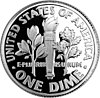
Facho, rama de carballo e rama de oliveira

United States dime, obverse, 2002.jpgUnited States dime, reverse.jpg

$0,25

George Washington

Gran Selo dos Estados Unidos
(outras versións)

Washington Quarter 79.PNGCOBREcentavosecuador2000-2.png

$0,50

John F. Kennedy

Gran Selo dos Estados Unidos
(outra versión)

2005 Half Dollar Obv Unc P.png2005 Half Dollar Rev Unc P.png

$1,00

Sacajawea
(outra versión)

Aguia
(outra versión)

2003 Sacagawea Rev.png


Billetes |


Denominación ($)
Rostro
Mostra

$1

George Washington

United States one dollar bill, obverse.jpg


$2

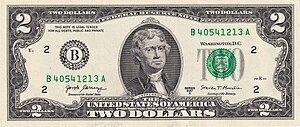
Thomas Jefferson

US $2 obverse.jpg


$5

Abraham Lincoln

US $5 Series 2006 obverse.jpg


$10

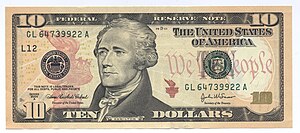
Alexander Hamilton

US10dollarbill-Series 2004A.jpg


$20

Andrew Jackson

US20-front.jpg


$50

Ulysses S. Grant

50 USD Series 2004 Note Front.jpg


$100

Benjamin Franklin

Obverse of the series 2009 $100 Federal Reserve Note.jpg


Notas |


  1. ↑ Aceptado xunto coa libra esterlina; segundo The World Factbook[Ligazón morta] e Foreign and Commonwealth Office.


  2. ↑ Way and Gideon, ed. (1823). Journals of the American congress: from 1774 to 1788: In four volumes (en inglés). vol.4. p. 675. 


  3. ↑ "Dollar". En Encyclopaedia Britannica (en inglés)


  4. ↑ "Lion Dollar. Introduction". En Coins.nd.com (en inglés)


  5. ↑ "Dollar". En Online Etymology Dictionary (en inglés)


  6. ↑ Florian Cajori ([1929]1993). A History of Mathematical Notations (Vol. 2). Nueva York: Dover, 15-29.


  7. ↑ Cajori examina as teorías de que o símbolo ten as súas orixes na marca de Potosí, as iniciais «O.S.», as Columnas de Hércules e a antiga abreviatura do sestercio, e descártaas. A History of Mathematical Notations, 15-20.


Véxase tamén |


Ligazóns externas |


  • US Bureau of Engraving and Printing (inglés e castelán)


  • Dólar estadounidense - Billetes dos Estados Unidos de América (en inglés) (en alemán)


Traído desde "https://gl.wikipedia.org/w/index.php?title=Dólar_estadounidense&oldid=5005649"


Menú de navegación


(window.RLQ=window.RLQ||[]).push(function()mw.config.set("wgPageParseReport":"limitreport":"cputime":"0.340","walltime":"0.451","ppvisitednodes":"value":679,"limit":1000000,"ppgeneratednodes":"value":0,"limit":1500000,"postexpandincludesize":"value":13510,"limit":2097152,"templateargumentsize":"value":2207,"limit":2097152,"expansiondepth":"value":11,"limit":40,"expensivefunctioncount":"value":3,"limit":500,"unstrip-depth":"value":0,"limit":20,"unstrip-size":"value":4653,"limit":5000000,"entityaccesscount":"value":4,"limit":400,"timingprofile":["100.00% 355.924 1 -total"," 36.65% 130.451 1 Modelo:Control_de_autoridades"," 20.71% 73.700 1 Modelo:Listaref"," 20.13% 71.631 1 Modelo:Commonscat"," 19.31% 68.716 1 Modelo:Irmáns"," 18.20% 64.775 1 Modelo:Caixa_lateral"," 16.54% 58.864 1 Modelo:Cita_libro"," 9.58% 34.108 1 Modelo:Cadro_de_moeda"," 8.64% 30.750 1 Modelo:1000"," 7.58% 26.989 1 Modelo:Icona_en_título"],"scribunto":"limitreport-timeusage":"value":"0.143","limit":"10.000","limitreport-memusage":"value":4139795,"limit":52428800,"cachereport":"origin":"mw1305","timestamp":"20190404080050","ttl":2592000,"transientcontent":false);mw.config.set("wgBackendResponseTime":131,"wgHostname":"mw1257"););

Popular posts from this blog

What does “fit” mean in this sentence? Announcing the arrival of Valued Associate #679: Cesar Manara Planned maintenance scheduled April 17/18, 2019 at 00:00UTC (8:00pm US/Eastern)How does 'jealousy' mean 'suspicion'?What does “not so say” mean?Does “somebody of my caliber” mean the speaker themselves?“accounting for high fasting blood glucose”- help about the meaningWhat does “cloaked by NDA” mean in this context?What does it mean by 'community ownership' in this context?What does “human corroborators” mean in this context?What does “everything but a fire” mean in this context?What does “run” mean here?What does “rabbited” mean/imply in this sentence?

Is it wise to focus on putting odd beats on left when playing double bass drums?What does the tie across other different notes mean?How to improve right hand picking/strumming technique for electric and acoustic guitar?How fast is the BPM should you start to use double bass pedal?Alternative or more advanced methods for counting rhythmsLost direction in practicing drumsIs there any way at all to tell if these measures are 6/4 vs. 3/2?Why is alberti bass so tiring?How does 'meter' differ from 'rhythm' in music?Rhythm question about piano sheet notationWhy is Bach's Cello Suite 1 written in 16th notes

History of India Contents Prehistoric era (until c. 3300 BCE) Bronze Age – "First urbanisation" (c. 3300 – c. 1800 BCE) Climate change, de-urbanisation, and Indo-Aryan migrations (c.1800 – 1500 BCE) Iron Age - Vedic period (c. 1500 – c. 600 BCE) "Second urbanisation" (c. 600 – c. 200 BCE) Classical to early medieval periods (c. 200 BCE – c. 1200 CE) Late medieval period (c. 1200 – 1526 CE) Early modern period (c. 1526–1858 CE) Modern period and independence (after c. 1850 CE) Historiography See also References Further reading External links Navigation menureviewedee[update]The crisisThe Evolution and History of Human Populations in South Asia: Inter-disciplinary Studies in Archaeology, Biological Anthropology, Linguistics and GeneticsThe Ancient Indus: Urbanism, Economy, and Society"Indus River Valley Civilizations"The Ancient Indus: Urbanism, Economy, and Society"India before the British: The Mughal Empire and its Rivals, 1526–1857"Why Europe Grew Rich and Asia Did Not: Global Economic Divergence, 1600–1850Development Centre Studies The World Economy Historical Statistics: Historical StatisticsDeveloping cultures: case studiesEthnic Groups of South Asia and the Pacific: An Encyclopedia: An Encyclopedia"Indian Economy During British Rule""Economic Impact of the British Rule in India | Indian History"The Bone Readers: Science and Politics in Human Origins Research"Out of Africa: new hypotheses and evidence for the dispersal of Homo sapiens along the Indian Ocean rim"10.3109/0301446100363924920334598"Genetic and archaeological perspectives on the initial modern human colonization of southern Asia"2013PNAS..11010699M10.1073/pnas.1306043110369678523754394"Edakkal Caves|Places Around in Wayanad"Protecting megaliths to keep history alive The Hindu daily"Archaeologists rock solid behind Edakkal Cave"The Global Prehistory of Human Migration"Indus Valley 2,000 years older than thought"the original"Stepwells -Cosmology of Subterranean Architecture as seen in Adalaj"A History of Ancient and Early medieval India : from the Stone Age to the 12th century"Stone celts in Harappa"the original"Peoples and languages in pre-islamic Indus valley"the original"The Sindhi language"the originalThe Aryan chromosome"Fluvial landscapes of the Harappan Civilization"2012PNAS..109E1688G10.1073/pnas.1112743109338705422645375"Is River Ghaggar, Saraswati? Geochemical Constraints""An Ancient Civilization, Upended by Climate Change""Huge Ancient Civilization's Collapse Explained"2003GeoRL..30.1425S10.1029/2002GL0168222006QSRv...25.1283M10.1016/j.quascirev.2005.10.0122011QuInt.229..140M10.1016/j.quaint.2009.11.012Climate Change and the Course of Global History: A Rough JourneyA History of Ancient and Early Medieval India: From the Stone Age to the 12th CenturyA History of Ancient and Mediaeval India: From the Stone Age to the 12th CenturyAntennae SwordA History of IndiaA History of IndiaAn Introduction to Hinduism"India: The Late 2nd Millennium and the Reemergence of Urbanism"The Coinage of Ancient IndiaA Sanskrit reader: with vocabulary and notesPedigree: the origins of words from nature"Early Sanskritization. Origins and Development of the Kuru State"10.11588/ejvs.1995.4.823The Sanskrit epics, Part 2The City in South AsiaThe UpanishadsAn Introduction to HinduismReligions of the World, Second Edition: A Comprehensive Encyclopedia of Beliefs and PracticesA History of Ancient and Early Medieval India: From the Stone Age to the 12th CenturyEarly India: From the Origins to AD 1300Republics in ancient Indiapp. 83ff"Magadha Empire""Lumbini Development Trust: Restoring the Lumbini Garden"the originalThe great armies of antiquityarchived"The Achaemenid Persian Empire (550–330 B.C.)""East–West Orientation of Historical Empires"1076-156X"Dinner on the Grand Trunk Road"10.2307/32502263250226"Silappathikaram Tamil Literature"the originalManimekalai – English transliteration of Tamil originalIndian Temple Architecture: Form and Transformation : the Karṇāṭa Drāviḍa Tradition, 7th to 13th CenturiesBuddhist ArchitectureA History of India"The World Economy (GDP) : Historical Statistics by Professor Angus Maddison"The World Economy – Volume 1: A Millennial Perspective and Volume 2: Historical Statistics10.2307/32502140004-36483250214A Comprehensive History of India: Volume 2Between the Empires: Society in India, 300 to 400Emergence of Viṣṇu and Śiva Images in India: Numismatic and Sculptural Evidence"Parthian Pair of Earrings"the originalThe Medical Times and Gazette, Volume 1Greatest emporium in the worldThe Cambridge History of Ancient China: From the Origins of Civilization to 221 BCBuddhist Records of the Western WorldArchaeology in Soviet Central AsiaThe Grandeur of Gandhara: The Ancient Buddhist Civilization of the Swat, Peshawar, Kabul and Indus ValleysIndian Sculpture: Circa 500 B.C.-A.D. 700"The History of Pakistan: The Kushans"Gupta Dynasty – MSN Encartathe original"India – Historical Setting – The Classical Age – Gupta and Harsha""Gupta Dynasty, Golden Age Of India"the original"The Age of the Guptas and After"the originalNumber Theory and Its History"Gupta dynasty (Indian dynasty)""Gupta dynasty: empire in 4th century"the original"The Story of India – Photo Gallery"The ASI say499315420"Pallava script"p. 145"CNG: eAuction 329. INDIA, Post-Gupta (Ganges Valley). Vardhanas of Thanesar and Kanauj. Harshavardhana. Circa AD 606–647. AR Drachm (13mm, 2.28 g, 1h)""Harsha""Sthanvishvara (historical region, India)""Harsha (Indian emperor)"Shyama Kumar Chattopadhyaya (2000) The Philosophy of Sankar's Advaita VedantaShankara's IntroductionShankara's Introduction19373677Shankara's IntroductionIs The Buddhist 'No-Self' Doctrine Compatible With Pursuing Nirvana?The Seven Spiritual Laws Of YogaIndia: The Ancient Past. A History of the Indian-Subcontinent from 7000 BC to AD 1200The Kashmir Series: Glimpses of Kashmiri Culture – Vivekananda Kendra, Kanyakumari (p. 57).Al-Hind: Early Medieval India and the Expansion of Islam, 7th–11th CenturiesHistory of GopāchalaLand of Two Rivers: A History of Bengal from the Mahabharata to MujibEuropean Trade and Colonial ConquestA History of IndiaA Comprehensive History Of Ancient India (3 Vol. Set)"The Last Years of Cholas: The decline and fall of a dynasty"the originalFascinating Hindutva: Saffron Politics and Dalit MobilisationGazetteer of the province of OudhAl- Hind: The slave kings and the Islamic conquest. 2"Shahi Family"The Cambridge history of Islam"Ameer Nasir-ood-deen Subooktugeen"Gazetteer of the Attock District, 1930, Part 1Land of seven rivers: History of India's GeographyTemple Desecration and Indo-Muslim StatesIslam in South Asia: A Short HistoryBeyond Orientalism: The Work of Wilhelm Halbfass and Its Impact on Indian and Cross-cultural StudiesThe Making of Terrorism in Pakistan: Historical and Social Roots of ExtremismOrnament in Indian ArchitectureA historical review of Hindu India: 300 B.C. to 1200 A.D."Indian States and Union Territories"Islam in South Asia: A Short HistoryA Brief History of the Indian PeoplesThe Modern ReviewDelhi Sultanate"Battuta's Travels: Delhi, capital of Muslim India"the original"Timur – conquest of India"the originalIndia HandbookBhaktiThe Four Denomination of Hinduism10.1007/s11407-008-9049-925691067"Vijayanagara Research Project::Elephant Stables"10.2307/26465262646526Historical Dictionary of the TamilsBihar General Knowledge DigestMapping Bihar: From Medieval to Modern TimesPopular Literature and Pre-modern Societies in South AsiaA manual of the Kistna district in the presidency of MadrasAncient Indian History and CivilizationFragmented Memories: Struggling to be Tai-Ahom in India"The Islamic World to 1600: Rise of the Great Islamic Empires (The Mughal Empire)"the originalDynasties: A Global History of Power, 1300–1800, p. 105"Whose fort is it anyway"10.1111/0020-8833.000532600793Development Centre Studies The World Economy Historical Statistics: Historical Statistics"India's Deindustrialization in the 18th and 19th Centuries"The Mughal Empire, p. 190"The Long Globalization and Textile Producers in India"The Mughal World: Life in India's Last Golden AgeAurangzeb: The Life and Legacy of India's Most Controversial KingIn the Shadow of the Taj: A Portrait of Agra"Iran in the Age of the Raj"p. 8610.2307/20539802053980Delhi, the Capital of IndiaAn Advanced History of Modern India"Journal of the Tanjore Maharaja Serfoji's Sarasvati Mahal Library"The Rediscovery of India: A New SubcontinentIslamic Renaissance In South Asia (1707–1867) : The Role Of Shah Waliallah & His SuccessorsAn Advanced History of Modern IndiaThe Great Maratha Mahadaji Scindia"Full text of "Selections from the papers of Lord Metcalfe; late governor-general of India, governor of Jamaica, and governor-general of Canada""The Discovery Of IndiaThe Sacred City of the Hindus: An Account of Benares in Ancient and Modern TimesResurrecting Banaras: Urban Space, Architecture and Religious BoundariesFaith & Philosophy of Sikhism"Missiles mainstay of Pak's N-arsenal"History Modern India By S.N. Sen"Sirajuddaula"ArchivedLongman History & Civics (Dual Government in Bengal)Madhya Pradesh National Means-Cum-Merit Scholarship Exam (Warren Hasting's system of Dual Government)A Military History of Britain: from 1775 to the PresentIndian Cultural Heritage Perspective For TourismHindu Rulers, Muslim Subjects: Islam, Rights, and the History of KashmirIndian HistoryAn Atlas and Survey of South Asian HistoryAn Historical Account of the British Trade Over the Caspian SeaIndian Merchants and Eurasian Trade, 1600–1750The Indian diaspora in Central Asia and its trade, 1550–1900From Constantinople to the home of Omar Khayyam: travels in Transcaucasia and northern Persia for historic and literary researchA journey from Bengal to England: through the northern part of India, Kashmire, Afghanistan, and Persia, and into Russia, by the Caspian-SeaA Second Journey through Persia, Armenia, and Asia Minor, to Constantinople, between the Years 1810 and 1816Reports from the consuls of the United States, 1887Portugal and its Empire, 1250–1800 (Collected Essays in Memory of Glenn J. Ames).: Portuguese Studies Review, Vol. 17, No. 1The Dutch Power in Kerala, 1729–1758http://mod.nic.inArchivedDossier Goa – A Recusa do Sacrifício InútilAn Imperial Crisis in British India: The Manipur Uprising of 1891The Truth of Babri Mosque"Kolkata (Calcutta) : History"the original"Robert Clive, Baron Clive, 'Clive of India', 1725–1774""The Transformation from a Pre-Colonial to a Colonial Order: The Case of India"10.2307/25955872595587A versatile geniusArchived10.1109/MWSYM.1997.602854"Rabindranath Tagore on Education"the original"Essay on 'Derozio and the Young Bengal Movement'"Poverty and Famines: An Essay on Entitlement and Deprivation"Plague"the originalPopulation Growth and Land Use"Reintegrating India with the World Economy""Census Of India 1931"A history of modern India, 1480–1950"'India's well-timed diversification of army helped democracy' | Business Standard News"Bal Gangadhar Tilak: Struggle for Swaraj"Participants from the Indian subcontinent in the First World War""Commonwealth War Graves Commission Annual Report 2007–2008 Online"the original1462689197110.1017/s0010417500016534178920Eurocentrism: a marxian critical realist critique"Ranjit Guha, "On Some Aspects of Historiography of Colonial India""10.2307/2168385216838510.7202/016593ar"Harvard scholar says the idea of India dates to a much earlier time than the British or the Mughals""In The Footsteps of Pilgrims""India's spiritual landscape: The heavens and the earth""India: A Sacred Geography by Diana L Eck – review"Modern India: The Origins of an Asian Democracy10.2307/21694222169422964322464"The Indian Subcontinent and 'Out of Africa 1'"254043308Encyclopedia of World ReligionsThe Evolution and History of Human Populations in South Asia: Inter-disciplinary Studies in Archaeology, Biological Anthropology, Linguistics and Genetics"The Early Paleolithic of the Indian Subcontinent: Hominin Colonization, Dispersals and Occupation History"Ancient Indian History and CivilizationAncient Indian Social History: Some Interpretationsthe originalIndia Before EuropeA Concise History of Modern India"The beginning of the historical period, c. 500–150 BCE"full textA History of Indiathe originalexcerpt and text searchexcerptexcerptAn Economic History of India: From Pre-Colonial Times to 1991excerpt and text searchexcerpt and text searchIndia as known to the ancient world10.1111/j.1468-0289.1985.tb00391.x2597191onlineThe History of India, as told by its own historians. The Muhammadan Periodonline editionHans William Brown research collection on 19th-century missionary work in India, 1882–1932, Ms. Coll. 1033, Kislak Center for Special Collections, Rare Books and Manuscripts, University of Pennsylvaniaee