Uganda Índice Historia | Política | Organización Administrativa | Demografía | Economía | Notas | Menú de navegación1°N 32°L / 1, -32eDicionario da Real Academia GalegaPortal das Palabras"Ethnologue – Languages of Uganda"o orixinaleWorldCat15705189518783412970430g4214563ID12102822260744061457-834730000 0001 2299 1309n80126332ID00573966ge131199ID1927961107553161000206D014454
Uganda
africanoKampalaSudán do SurLago VitoriaRuandaTanzaniaQueniaRepública Democrática do Congoreino de Bunyoro-KitaraBugandaAnkole1888Compañía Británica da África Oriental1894protectoradoReino Unido1 de marzo1961protectorado9 de outubro1962estadofederación1966Milton Oboteconstitución1967república1971Idí Amíngolpe de estadoditadorindioTanzania1979Yusuf Lule1979Godfrey Binaisa1980Paulo MuwangaYoweri MuseveniKampala27 de xullo1985ZambiaTito OkelloNairobiqueniataDaniel Arap Moi1986SudánFondo Monetario InternacionalBanco Mundialdemocraticamente1996distritoscondadosparroquiasvilascenso2002Grandes Lagos Africanoslinguas africanasbantunilóticasluGandagrupo étnicobuGandaingléslingua oficialkiSwahiliindias
(function()var node=document.getElementById("mw-dismissablenotice-anonplace");if(node)node.outerHTML="u003Cdiv class="mw-dismissable-notice"u003Eu003Cdiv class="mw-dismissable-notice-close"u003E[u003Ca tabindex="0" role="button"u003Eagocharu003C/au003E]u003C/divu003Eu003Cdiv class="mw-dismissable-notice-body"u003Eu003Cdiv id="localNotice" lang="gl" dir="ltr"u003Eu003Ctable class="plainlinks fmbox fmbox-system plainlinks" style="background:#fffdf5; border:1px solid #ffc5a6; margin:1em auto 1em auto; padding: 0.5ex; text-align: center;"u003Enu003Ctbodyu003Eu003Ctru003Ennu003Ctd class="mbox-text" style=""u003E u003Cbu003Eu003Ca href="/wiki/Carl_Sagan" title="Carl Sagan"u003ECarl Saganu003C/au003Eu003C/bu003E é candidato a u003Ca href="/wiki/Wikipedia:Artigos_de_calidade" title="Wikipedia:Artigos de calidade"u003Eartigo de calidadeu003C/au003E. u003Ca href="/wiki/Wikipedia:Votaci%C3%B3ns#Quen_pode_votar?" title="Wikipedia:Votacións"u003ESe reúnes os requisitosu003C/au003E podes u003Ca href="/wiki/Wikipedia:Artigos_de_calidade/Votaci%C3%B3ns" title="Wikipedia:Artigos de calidade/Votacións"u003Eu003Cbu003Eparticipar na votaciónu003C/bu003Eu003C/au003E. u003C/tdu003Enu003Ctd class="mbox-imageright"u003E u003Ca href="/wiki/Wikipedia:Artigos_de_calidade/Votaci%C3%B3ns" title="Wikipedia:Artigos de calidade/Votacións"u003Eu003Cimg alt="Cscr-candidate.svg" src="//upload.wikimedia.org/wikipedia/commons/thumb/3/3d/Cscr-candidate.svg/30px-Cscr-candidate.svg.png" decoding="async" width="30" height="25" srcset="//upload.wikimedia.org/wikipedia/commons/thumb/3/3d/Cscr-candidate.svg/45px-Cscr-candidate.svg.png 1.5x, //upload.wikimedia.org/wikipedia/commons/thumb/3/3d/Cscr-candidate.svg/60px-Cscr-candidate.svg.png 2x" data-file-width="522" data-file-height="438" /u003Eu003C/au003E u003C/tdu003Enu003C/tru003Enu003C/tbodyu003Eu003C/tableu003Eu003C/divu003Eu003C/divu003Eu003C/divu003E";());
Uganda
Saltar ata a navegación
Saltar á procura
Coordenadas: 1°N 32°L / 1, -32
| República de Uganda | |||
|---|---|---|---|
Republic of Uganda Jamhuri ya Uganda | |||
| |||
| |||
 | |||
Lema: For God and My Country Por Deus e o meu País | |||
| |||
Capital • Poboación | Kampala 1 208 544 | ||
| Cidade máis poboada | Kampala | ||
| Linguas oficiais | Inglés, Swahili | ||
| Forma de goberno | República democrática | ||
Presidente Vicepresidente | Yoweri Museveni Edward Ssekandi | ||
Independencia do Reino Unido | 9 de outubro de 1962 | ||
| Superficie | Posto 81º | ||
| • Total | 236 040 km² | ||
| • % auga | 15,39 | ||
| Fronteiras | 2 698 km | ||
| Poboación | Posto 41º | ||
| • Total (2009) | 32 709 865 hab. | ||
| • Densidade | n/d | ||
PIB (nominal) | |||
| • Total | n/d | ||
| • per cápita | n/d | ||
PIB (PPA) | Posto 76º | ||
| • Total (2005) | 48 620 US$ | ||
| • per cápita | 1 817 US$ | ||
| Moeda | Xilin ugandés ( UGX) | ||
| IDH | n/d | ||
| Xentilicio | Ugandés, ugandesa | ||
| Fuso horario | UTC + 3 | ||
| • Horario de verán | Non aplica | ||
| Dominio de Internet | .ug | ||
| Prefixo telefónico | +256 | ||
| Prefixo radiofónico | 5XA-5XZ | ||
| Código ISO | 800 / UGA / UG | ||
| Membro de: Commonwealth, UA, ONU | |||
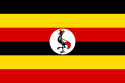

Uganda[1] é un país africano, cuxa capital é Kampala. En 2009 tiña 32.709.865 habitantes. Limitado ao norte con Sudán do Sur, ao sur co Lago Vitoria, Ruanda e Tanzania, ao leste con Quenia e ao oeste coa República Democrática do Congo.
Índice
1 Historia
2 Política
3 Organización Administrativa
4 Demografía
5 Economía
6 Notas
Historia |
Os primeiros habitantes coñecidos foron poboacións cazadoras colleitadoras. Hai 1500 ou 2000 anos comezaron a se asentar no territorio da actual Uganda poboacións de lingua bantú que viñan probablemente do centro e o oeste do continente e que se asentaron preferentemente no sur. O Imperio de Kitara do século XIV e XV representa a máis antiga forma de organización formal, seguida polo reino de Bunyoro-Kitara, e máis tarde o de Buganda e Ankole.
Poboación nilótica, como os luo e ateker entraron na área desde o norte, probabelmente arredor do 120 d.C. Asentáronse sobre todo no norte e leste. Esta área foi, en 1888, concedida á Compañía Británica da África Oriental e, en 1894, o reino do Buganda tornouse un protectorado do Reino Unido.
Despois de varias manobras por parte dos británicos, realizáronse eleccións a 1 de marzo de 1961 e Benedicto Kiwanuka tornouse “Ministro-Xefe” de Uganda, aínda como un protectorado e tornouse independente o 9 de outubro de 1962. Nos anos seguintes, verificouse unha loita política entre os apoiantes dun estado centralizado, en vez da federación vixente baseada nos reinos. Como resultado, en febreiro de 1966, o entón Primeiro Ministro Milton Obote suspendeu a constitución, asumiu todos os poderes e despois o de Presidente e Vicepresidente. En setembro de 1967, unha nova constitución proclamou Uganda como unha república, deu ao presidente poderes adicionais e aboliu os reinos tradicionais.
En 1971, Idí Amín tomou o poder nun golpe de estado e dirixiu o país como un ditador durante case unha década, expulsou os residentes de orixe indio e promoveu o asasinato dun número estimado en cerca de 300.000 cidadáns. O seu réxime terminou coa invasión dun exército de rebeldes, apoiados pola Tanzania no 1979.
Despois deste contra-golpe, a Fronte Nacional de Liberación de Uganda formou un goberno interino, con Yusuf Lule como presidente, que adoptou un sistema ministerial de administración e creou un órgano cuasi-parlamentario, a Comisión Consultiva Nacional (NCC), mais este órgano e o gabinete de Lule tiñan visións políticas diferentes e, en xuño de 1979, o NCC substituíu a Lule por Godfrey Binaisa. A disputa continuou sobre os poderes do presidente interino, Binaisa foi afastado en maio de 1980 e o Uganda pasou a ser gobernado por unha comisión militar dirixida por Paulo Muwanga. En decembro de 1980, foron realizadas eleccións, que levaron de novo á presidencia a Obote que, era vicepresidente de Muwanga. No período que se seguiu, as forzas de seguridade estableceron un dos peores récords de dereitos humanos do mundo. Nos seus esforzos para terminar cunha rebelión liderada por Yoweri Museveni e o seu Exército de Resistencia Nacional (“National Resistance Army” ou NRA), eles practicamente destruíron unha parte substancial do país, especialmente na área de Luwero, a norte de Kampala.
O 27 de xullo de 1985, unha brigada do exército, composta por “Acholi” (unha das etnias do Uganda) e comandada polo Tenente-Xeneral Basilio Olara Okello, tomou Kampala e proclamou novamente un goberno militar. Obote exiliouse na Zambia e o novo réxime, dirixido polo anterior comandante das forzas de defensa, o Xeneral Tito Okello (que non era parente de Olara-Okello), iniciou negociacións con Museveni, prometendo mellorar o respecto dos dereitos humanos, acabar cos conflitos entre tribos e organizar eleccións libres e xustas. Mentres tanto, as masacres continuaron unha vez que Okello tentaba destruír o NRA e seus apoiantes.
A pesar de negociacións en Nairobi, baixo a mediación do Presidente queniata Daniel Arap Moi, e de teren chegado a un acordo de cesar-fogo, o NRA continuou a loitar e, en xaneiro do 1986, capturou Kampala, forzando ás forzas de Okello a fuxiren para o Sudán e colocando a Museveni como presidente. Este acabou cos abusos aos dereitos humanos, iniciou unha política de liberalización e de liberdade de prensa e estableceu acordos co Fondo Monetario Internacional, o Banco Mundial e con varios países.
Museveni foi democraticamente electo en 1996, cando concorreu contra Paul Ssemoxere, líder do Partido Democrático, tendo gaño o 75% dos votos.
Política |
Organización Administrativa |
- Artigo principal: Subdivisións de Uganda.
 Distritos de Uganda | ||||||||||||||||||||||||||||||||||||||||||||||||||||||||||||||||||||||||||||||||||||||||||||||||||||||||||||||||||||||||||||||||||||||||||||||||||||||||||||||||||||||||||||||||||||||||||||||||||||||||||||||||||||||||||||||||||||||||||||||||||||||||||||||||||||||||||||||||||||||||||||||||||||||||||||||||||||||||||||||||||||||||||||||||||||||||||||||||||||||
|---|---|---|---|---|---|---|---|---|---|---|---|---|---|---|---|---|---|---|---|---|---|---|---|---|---|---|---|---|---|---|---|---|---|---|---|---|---|---|---|---|---|---|---|---|---|---|---|---|---|---|---|---|---|---|---|---|---|---|---|---|---|---|---|---|---|---|---|---|---|---|---|---|---|---|---|---|---|---|---|---|---|---|---|---|---|---|---|---|---|---|---|---|---|---|---|---|---|---|---|---|---|---|---|---|---|---|---|---|---|---|---|---|---|---|---|---|---|---|---|---|---|---|---|---|---|---|---|---|---|---|---|---|---|---|---|---|---|---|---|---|---|---|---|---|---|---|---|---|---|---|---|---|---|---|---|---|---|---|---|---|---|---|---|---|---|---|---|---|---|---|---|---|---|---|---|---|---|---|---|---|---|---|---|---|---|---|---|---|---|---|---|---|---|---|---|---|---|---|---|---|---|---|---|---|---|---|---|---|---|---|---|---|---|---|---|---|---|---|---|---|---|---|---|---|---|---|---|---|---|---|---|---|---|---|---|---|---|---|---|---|---|---|---|---|---|---|---|---|---|---|---|---|---|---|---|---|---|---|---|---|---|---|---|---|---|---|---|---|---|---|---|---|---|---|---|---|---|---|---|---|---|---|---|---|---|---|---|---|---|---|---|---|---|---|---|---|---|---|---|---|---|---|---|---|---|---|---|---|---|---|---|---|---|---|---|---|---|---|---|---|---|---|---|---|---|---|---|---|---|---|---|---|---|---|---|---|---|---|---|---|---|---|---|---|---|---|---|---|---|---|---|---|---|---|---|---|---|---|

| ||||||||||||||||||||||||||||||||||||||||||||||||||||||||||||||||||||||||||||||||||||||||||||||||||||||||||||||||||||||||||||||||||||||||||||||||||||||||||||||||||||||||||||||||||||||||||||||||||||||||||||||||||||||||||||||||||||||||||||||||||||||||||||||||||||||||||||||||||||||||||||||||||||||||||||||||||||||||||||||||||||||||||||||||||||||||||||||||||||||
Uganda divídese en 111 distritos, en catro rexións administrativas. A maioría dos distritos teñen o nome das súas principais cidades comerciais e administrativas.
Cada distrito se subdivide en sub-distritos, condados, sub-condados, parroquias e vilas.
A continuación preséntanse cifras de poboación no censo de 2002. Nótese que daquelas só había 56 distritos, e os datos da poboación fixéronse mirando os condados e subcondados.
Demografía |
Uganda ten preto de 24 millóns de habitantes, vivindo principalmente á beira dos Grandes Lagos Africanos que este país partilla. Ten listadas 39 linguas africanas, dos grupos bantu e nilóticas, entre as cales, a máis falada (por cerca de 16 % da poboación[2] é a lingua “ganda” ou luGanda, relativa ao principal grupo étnico deste país, os buGanda. Outras linguas faladas polos residentes no Uganda són o inglés (lingua oficial), o kiSwahili e linguas indias.
Economía |
- Artigo principal: Economía de Uganda.
Notas |
↑ Definicións no Dicionario da Real Academia Galega e no Portal das Palabras para ugandés.
↑ "Ethnologue – Languages of Uganda". Arquivado dende o orixinal o 14 de maio de 2005. Consultado o 29 de maio de 2005.
| ||||||||||||||
 Alxeria •
 Angola •
 Benín •
 Botswana •
 Burkina Faso •
 Burundi •
 Cabo Verde •
 Camerún •
 Chad •
 Cimbabue •
 Comores •
 República do Congo •
 R.D. do Congo •
 Costa do Marfil •
 Djibuti •
 Eritrea •
 Etiopía •
 Gabón •
 Gambia •
 Ghana •
 Guinea •
 Guiné-Bissau •
 Guinea Ecuatorial •
 Lesoto •
 Liberia •
 Libia •
 Madagascar •
 Malaui •
 Malí •
 Marrocos •
 Mauricio •
 Mauritania •
 Mozambique •
 Namibia •
 Níxer •
 Nixeria •
 Kenya •
 República Centroafricana •
 Ruanda •
 San Tomé e Príncipe •
 Seychelles •
 Senegal •
 Serra Leoa •
 Somalia •
 Somalilandia •
 Suacilandia •
 Suráfrica •
 Sudán •
 Sudán do Sur •
 Tanzania •
 Togo •
 Tunisia •
 Zambia
 Exipto
 Illas Canarias •
 Ceuta -
 Madeira -
 Mayotte -
 Melilla •
 Sáhara Occidental
|
 :
|
Categoría:
- Uganda


(window.RLQ=window.RLQ||[]).push(function()mw.config.set("wgPageParseReport":"limitreport":"cputime":"0.848","walltime":"1.143","ppvisitednodes":"value":1781,"limit":1000000,"ppgeneratednodes":"value":0,"limit":1500000,"postexpandincludesize":"value":84040,"limit":2097152,"templateargumentsize":"value":7285,"limit":2097152,"expansiondepth":"value":9,"limit":40,"expensivefunctioncount":"value":20,"limit":500,"unstrip-depth":"value":0,"limit":20,"unstrip-size":"value":1746,"limit":5000000,"entityaccesscount":"value":20,"limit":400,"timingprofile":["100.00% 855.667 1 -total"," 53.92% 461.416 1 Modelo:Control_de_autoridades"," 21.91% 187.501 1 Modelo:África"," 21.47% 183.671 1 Modelo:Navbox"," 19.68% 168.417 59 Modelo:Nowrap"," 7.61% 65.086 1 Modelo:País"," 6.49% 55.539 1 Modelo:Infobox"," 6.10% 52.159 1 Modelo:Listaref"," 4.91% 42.020 1 Modelo:Cita_web"," 4.49% 38.424 1 Modelo:Sen_referencias"],"scribunto":"limitreport-timeusage":"value":"0.481","limit":"10.000","limitreport-memusage":"value":12340475,"limit":52428800,"cachereport":"origin":"mw1278","timestamp":"20190330193829","ttl":2592000,"transientcontent":false););"@context":"https://schema.org","@type":"Article","name":"Uganda","url":"https://gl.wikipedia.org/wiki/Uganda","sameAs":"http://www.wikidata.org/entity/Q1036","mainEntity":"http://www.wikidata.org/entity/Q1036","author":"@type":"Organization","name":"Contribuidores dos projetos da Wikimedia","publisher":"@type":"Organization","name":"Wikimedia Foundation, Inc.","logo":"@type":"ImageObject","url":"https://www.wikimedia.org/static/images/wmf-hor-googpub.png","datePublished":"2005-05-29T06:54:45Z","dateModified":"2019-03-30T19:38:28Z","image":"https://upload.wikimedia.org/wikipedia/commons/4/4e/Flag_of_Uganda.svg"(window.RLQ=window.RLQ||[]).push(function()mw.config.set("wgBackendResponseTime":184,"wgHostname":"mw1261"););


