Amoeiro Índice Poboación | Xeografía | Historia | Galería de imaxes | Parroquias | Lugares de Amoeiro | Notas | Véxase tamén | Menú de navegación42°24′54.45″N 07°56′50.23″O / 42.4151250, -7.9472861www.amoeiro.galeINEIGE"Evolución do uso do galego por concellos""Poboación de Amoeiro. Nomenclátor de Galicia. Ano 2016"Páxina oficial do concello de Amoeiroee3130141340681Traballa nel

AllarizAmoeiroA ArnoiaAviónBaltarBandeBaños de MolgasBarbadásO Barco de ValdeorrasBeadeBearizOs BlancosBoborásA BolaO BoloCalvos de RandínCarballeda de AviaCarballeda de ValdeorrasO CarballiñoCartelleCastrelo de MiñoCastrelo do ValCastro CaldelasCelanovaCenlleChandrexa de QueixaColesCortegadaCualedroEntrimoEsgosGomesendeA GudiñaO IrixoLaroucoLazaLeiroLobeiraLobiosMacedaManzanedaMasideMelónA MercaA MezquitaMontederramoMonterreiMuíñosNogueira de RamuínOímbraOurensePaderne de AllarizPadrendaParada de SilO Pereiro de AguiarA PeroxaPetínPiñorA Pobra de TrivesPontedevaPorqueiraPunxínQuintela de LeiradoRairiz de VeigaRamirásRibadaviaRiósA RúaRubiáSan AmaroSan Cibrao das ViñasSan Cristovo de CeaSan Xoán de RíoSandiásSarreausTaboadelaA TeixeiraToénTrasmirasA VeigaVereaVerínViana do BoloVilamarínVilamartín de ValdeorrasVilar de BarrioVilar de SantosVilardevósVilariño de ConsoXinzo de LimiaXunqueira de AmbíaXunqueira de Espadanedo


Amoeiro


provincia de Ourensecomarca de OurenseIGE2016amoeirésrío MiñoVilamarínSan Cristovo de CeaOurensePunxínColesMasidepiñeiroseucaliptosrío Barbantiñofervenza do CachónVía da PrataCamiño de SantiagoTrasalbapetróglifosIdade de FerroChan da Feraduracastro de ZarraCoto de CastroMarmáncastrocastelo do Formigueiroséculo XIrománicamosteiro de Bóvedaséculo XIImosteiro de Cornocesmosteiro de San Damiánmosteiro de Oseiraorde cistercienseRibadaviaguerra da Independencia españolanapoleónicaspazoscasas grandescasa de Cima de VilaRamón Otero PedrayoO Chan da FerraduraOtero PedrayoAbruciños (San Xoán)Amoeiro (Santa María)Bóveda de Amoeiro (San Paio)Cornoces (San Martiño)Fontefría (Santa Mariña)Parada de Amoeiro (Santiago)Rouzós (San Cibrao)Trasalba (San Pedro)Lugares de Amoeiro


Amoeiro


Na Galipedia, a Wikipedia en galego.


Saltar ata a navegación
Saltar á procura


Coordenadas: 42°24′54.45″N 07°56′50.23″O / 42.4151250, -7.9472861


Amoeiro
Escudo de Amoeiro

Casa do concello de Amoeiro.JPG
Casa do concello de Amoeiro.

Situacion Amoeiro.PNG
Situación

Xentilicio[1]
amoeirés/amoeiresa
Xeografía
ProvinciaProvincia de Ourense
ComarcaComarca de Ourense
Poboación2.265 hab. (2018)
Área39,7 km²
Densidade57,05 hab./km²
Entidades de poboación8 parroquias
Política (2015)
Alcalde
Rafael Rodríguez Villarino (PSdeG-PSOE)
Concelleiros

PPdeG: 4
PSdeG-PSOE: 6
Outros: XEIDA 1
Eleccións municipais en Amoeiro
Uso do galego[2] (2011)
Galegofalantes64,91%
Na rede
www.amoeiro.gal

Amoeiro é un concello da provincia de Ourense, pertencente á comarca de Ourense. Segundo o IGE en 2016 tiña 2.264 habitantes[3](2.274 en 2014, 2.371 no 2006, 2.356 no 2005, 2.322 no 2004, 2.276 no 2003).O seu xentilicio (véxase no Galizionario) é «amoeirés»[4].


Índice


  • 1 Poboación


  • 2 Xeografía


  • 3 Historia


  • 4 Galería de imaxes


  • 5 Parroquias


  • 6 Lugares de Amoeiro


  • 7 Notas


  • 8 Véxase tamén

    • 8.1 Ligazóns externas


Poboación |


Censo Total (Habitantes)
2.274 (2014)

Menores de 15 anos
158 (6.95 %)

Entre 15 e 64 anos
1.349 (59.32 %)

Maiores de 65 anos
767 (33.73 %)


Evolución da poboación de Amoeiro   Fontes: INE e IGE.

1900

1930

1950

1981

2004

2009

2011

2012

2013

2014

2015

2016

2017

2018
4.490
4.580
4.169
2.593
2.322
2.300


2.274
2.264
13
14

(Os criterios de rexistro censual variaron entre 1900 e 2004, e os datos do INE e do IGE poden non coincidir.)


Xeografía |


O municipio ten 39,7 km². Está situado na meseta dos Chaos, ao noroeste do val do río Miño. Limita ao norte con Vilamarín e San Cristovo de Cea, ao sur con Ourense e Punxín, ao leste con Coles, e ao oeste con Maside.


Ten un terreo chan e fértil, con fragas de piñeiros e eucaliptos. Conta cun couto cinexético e cunha zona de pesca no río Barbantiño, no que está a fervenza do Cachón.


Polo concello discorre a Vía da Prata do Camiño de Santiago.


Historia |


No lugar da Ferradura (Trasalba), consérvanse restos de petróglifos da Idade de Ferro no conxunto do Chan da Feradura. No castro de Zarra tamén hai restos de petróglifos, así como no Raposo. No Coto de Castro e en Marmán atopouse abundante cerámica e estruturas arquitectónicas.


No lugar do Formigueiro hai restos dun castelo medieval, asentado sobre un castro, do que quedan vestixios en diversas casas e na igrexa do lugar. O castelo do Formigueiro, documentado xa no século XI, era coñecido primitivamente co nome de Alba de Búbal, de onde procede o topónimo Trasalba.


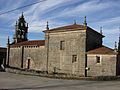
Consérvanse varios templos relixiosos de arquitectura románica, como as igrexas de San Martiño de Cornoces (levantada sobre penas e un antigo castro) , Santa María de Amoeiro, Santiago de Parada e Santa Mariña de Fontefría (no adro da cal se descubriu un sarcófago de granito anterior ao século XI). Consérvanse restos do mosteiro de Bóveda (o primeiro construído en Galiza da orde do Císter, na segunda metade do século XII), o mosteiro de Cornoces e o mosteiro de San Damián.


As terras do concello pertenceron ao señorío da Casa de Vilamarín, e estivo incluído entre as enormes posesións do mosteiro de Oseira, da orde cisterciense. Tivo gran produción de gran e pan de trigo, que abastecía ao mercado de Ribadavia, de onde se traía o viño.


En 1809, durante a guerra da Independencia española, os habitantes dos Chaos salvaron o gando dos ataques das tropas napoleónicas escondéndoo nos habitáculos abovedados soterrados do castelo.


Na construción da capela de Sanxiao foron utilizadas dúas pedras decoradas procedentes dun poboado castrexo próximo (este tipo de restos atópanse tamén noutras construcións da aldea) e na mesma atopamos unha das únicas aras romanas da provincia reutilizadas como pila bautismal.


Do patrimonio civil consérvanse pazos e casas grandes coma a dos Mirandas (Parada), Coto Martín (Bóveda), Reinoso (Cornoces), San Damián (Abruciños), Gaión (Amoeiro) e a casa de Cima de Vila en Trasalba, casa natal de Ramón Otero Pedrayo. Pola ponte de San Fiz, sobre o río Barbantiño, no límite co concello de Maside, pasaba o camiño real de Ourense cara a Pontevedra. O forno comunal de Sabariz ten gran valor etnográfico.


Galería de imaxes |


Artigo principal: Galería de imaxes de Amoeiro.

Parroquias |


Galicia | Provincia de Ourense | Parroquias de Amoeiro


Abruciños (San Xoán) | Amoeiro (Santa María) | Bóveda de Amoeiro (San Paio) | Cornoces (San Martiño) | Fontefría (Santa Mariña) | Parada de Amoeiro (Santiago) | Rouzós (San Cibrao) | Trasalba (San Pedro)


Lugares de Amoeiro |


Para unha lista completa de todos os lugares do concello de Amoeiro vexa: Lugares de Amoeiro.


Notas |


  1. ↑ Véxase no Galizionario.


  2. ↑ Neira, Carlos. "Evolución do uso do galego por concellos". Consultado o 14 de outubro de 2014. 


  3. ↑ Instituto Galego de Estatística (IGE). Xunta de Galicia, ed. (2017). "Poboación de Amoeiro. Nomenclátor de Galicia. Ano 2016". Consultado o 27 de febreiro de 2017. 


  4. ↑ Costas González, X.-H. (2016): Os xentilicios de Galicia e dos outros territorios de lingua galega, páx. 40. Universidade de Vigo. ISBN 978-84-8158-706-7


Véxase tamén |


Ligazóns externas |


  • Páxina oficial do concello de Amoeiro


Este artigo tan só é un bosquexo
 Este artigo sobre concellos de Galicia é, polo de agora, só un bosquexo. Traballa nel para axudar a contribuír a que a Galipedia mellore e medre.
 Existen igualmente outros artigos relacionados con este tema nos que tamén podes contribuír.


Traído desde "https://gl.wikipedia.org/w/index.php?title=Amoeiro&oldid=4653408"


Menú de navegación


(window.RLQ=window.RLQ||[]).push(function()mw.config.set("wgPageParseReport":"limitreport":"cputime":"0.508","walltime":"1.060","ppvisitednodes":"value":1382,"limit":1000000,"ppgeneratednodes":"value":0,"limit":1500000,"postexpandincludesize":"value":52270,"limit":2097152,"templateargumentsize":"value":4629,"limit":2097152,"expansiondepth":"value":12,"limit":40,"expensivefunctioncount":"value":2,"limit":500,"unstrip-depth":"value":0,"limit":20,"unstrip-size":"value":6944,"limit":5000000,"entityaccesscount":"value":3,"limit":400,"timingprofile":["100.00% 921.674 1 -total"," 16.98% 156.514 1 Modelo:Control_de_autoridades"," 16.37% 150.908 1 Modelo:Concello"," 14.54% 133.985 1 Modelo:Infobox"," 8.19% 75.508 1 Modelo:Listaref"," 6.34% 58.423 2 Modelo:Cita_web"," 4.10% 37.749 1 Modelo:Coordenadas"," 3.13% 28.825 1 Modelo:ConcellosOurense"," 3.06% 28.197 1 Modelo:Commonscat"," 2.70% 24.897 1 Modelo:Irmáns"],"scribunto":"limitreport-timeusage":"value":"0.211","limit":"10.000","limitreport-memusage":"value":3698379,"limit":52428800,"cachereport":"origin":"mw1287","timestamp":"20190319152904","ttl":2592000,"transientcontent":false););"@context":"https://schema.org","@type":"Article","name":"Amoeiro","url":"https://gl.wikipedia.org/wiki/Amoeiro","sameAs":"http://www.wikidata.org/entity/Q1627616","mainEntity":"http://www.wikidata.org/entity/Q1627616","author":"@type":"Organization","name":"Contribuidores dos projetos da Wikimedia","publisher":"@type":"Organization","name":"Wikimedia Foundation, Inc.","logo":"@type":"ImageObject","url":"https://www.wikimedia.org/static/images/wmf-hor-googpub.png","datePublished":"2004-11-22T22:48:43Z","dateModified":"2018-02-22T09:54:28Z","image":"https://upload.wikimedia.org/wikipedia/gl/b/be/Casa_do_concello_de_Amoeiro.JPG","headline":"concello da comarca de Ourense"(window.RLQ=window.RLQ||[]).push(function()mw.config.set("wgBackendResponseTime":158,"wgHostname":"mw1321"););

Popular posts from this blog

Is it wise to focus on putting odd beats on left when playing double bass drums?What does the tie across other different notes mean?How to improve right hand picking/strumming technique for electric and acoustic guitar?How fast is the BPM should you start to use double bass pedal?Alternative or more advanced methods for counting rhythmsLost direction in practicing drumsIs there any way at all to tell if these measures are 6/4 vs. 3/2?Why is alberti bass so tiring?How does 'meter' differ from 'rhythm' in music?Rhythm question about piano sheet notationWhy is Bach's Cello Suite 1 written in 16th notes

map list to bin numbersquantilization (if that is a word)Map efficiently over duplicates in listGenerating a list of cubefree numbersIs there an equivalent to MATLAB's linspace?Convert a list of hexadecimal numbers to decimalTaking one list Mod a second listlist of items and group of alternative itemsHow find numbers in this list of inequalities?Selecting list entries with a True False index list of similar lengthReplace element in array by checking condition in another listAttempting to fill a table with the number of elements in each bin and make a table with the elements in the bins?

History of India Contents Prehistoric era (until c. 3300 BCE) Bronze Age – "First urbanisation" (c. 3300 – c. 1800 BCE) Climate change, de-urbanisation, and Indo-Aryan migrations (c.1800 – 1500 BCE) Iron Age - Vedic period (c. 1500 – c. 600 BCE) "Second urbanisation" (c. 600 – c. 200 BCE) Classical to early medieval periods (c. 200 BCE – c. 1200 CE) Late medieval period (c. 1200 – 1526 CE) Early modern period (c. 1526–1858 CE) Modern period and independence (after c. 1850 CE) Historiography See also References Further reading External links Navigation menureviewedee[update]The crisisThe Evolution and History of Human Populations in South Asia: Inter-disciplinary Studies in Archaeology, Biological Anthropology, Linguistics and GeneticsThe Ancient Indus: Urbanism, Economy, and Society"Indus River Valley Civilizations"The Ancient Indus: Urbanism, Economy, and Society"India before the British: The Mughal Empire and its Rivals, 1526–1857"Why Europe Grew Rich and Asia Did Not: Global Economic Divergence, 1600–1850Development Centre Studies The World Economy Historical Statistics: Historical StatisticsDeveloping cultures: case studiesEthnic Groups of South Asia and the Pacific: An Encyclopedia: An Encyclopedia"Indian Economy During British Rule""Economic Impact of the British Rule in India | Indian History"The Bone Readers: Science and Politics in Human Origins Research"Out of Africa: new hypotheses and evidence for the dispersal of Homo sapiens along the Indian Ocean rim"10.3109/0301446100363924920334598"Genetic and archaeological perspectives on the initial modern human colonization of southern Asia"2013PNAS..11010699M10.1073/pnas.1306043110369678523754394"Edakkal Caves|Places Around in Wayanad"Protecting megaliths to keep history alive The Hindu daily"Archaeologists rock solid behind Edakkal Cave"The Global Prehistory of Human Migration"Indus Valley 2,000 years older than thought"the original"Stepwells -Cosmology of Subterranean Architecture as seen in Adalaj"A History of Ancient and Early medieval India : from the Stone Age to the 12th century"Stone celts in Harappa"the original"Peoples and languages in pre-islamic Indus valley"the original"The Sindhi language"the originalThe Aryan chromosome"Fluvial landscapes of the Harappan Civilization"2012PNAS..109E1688G10.1073/pnas.1112743109338705422645375"Is River Ghaggar, Saraswati? Geochemical Constraints""An Ancient Civilization, Upended by Climate Change""Huge Ancient Civilization's Collapse Explained"2003GeoRL..30.1425S10.1029/2002GL0168222006QSRv...25.1283M10.1016/j.quascirev.2005.10.0122011QuInt.229..140M10.1016/j.quaint.2009.11.012Climate Change and the Course of Global History: A Rough JourneyA History of Ancient and Early Medieval India: From the Stone Age to the 12th CenturyA History of Ancient and Mediaeval India: From the Stone Age to the 12th CenturyAntennae SwordA History of IndiaA History of IndiaAn Introduction to Hinduism"India: The Late 2nd Millennium and the Reemergence of Urbanism"The Coinage of Ancient IndiaA Sanskrit reader: with vocabulary and notesPedigree: the origins of words from nature"Early Sanskritization. Origins and Development of the Kuru State"10.11588/ejvs.1995.4.823The Sanskrit epics, Part 2The City in South AsiaThe UpanishadsAn Introduction to HinduismReligions of the World, Second Edition: A Comprehensive Encyclopedia of Beliefs and PracticesA History of Ancient and Early Medieval India: From the Stone Age to the 12th CenturyEarly India: From the Origins to AD 1300Republics in ancient Indiapp. 83ff"Magadha Empire""Lumbini Development Trust: Restoring the Lumbini Garden"the originalThe great armies of antiquityarchived"The Achaemenid Persian Empire (550–330 B.C.)""East–West Orientation of Historical Empires"1076-156X"Dinner on the Grand Trunk Road"10.2307/32502263250226"Silappathikaram Tamil Literature"the originalManimekalai – English transliteration of Tamil originalIndian Temple Architecture: Form and Transformation : the Karṇāṭa Drāviḍa Tradition, 7th to 13th CenturiesBuddhist ArchitectureA History of India"The World Economy (GDP) : Historical Statistics by Professor Angus Maddison"The World Economy – Volume 1: A Millennial Perspective and Volume 2: Historical Statistics10.2307/32502140004-36483250214A Comprehensive History of India: Volume 2Between the Empires: Society in India, 300 to 400Emergence of Viṣṇu and Śiva Images in India: Numismatic and Sculptural Evidence"Parthian Pair of Earrings"the originalThe Medical Times and Gazette, Volume 1Greatest emporium in the worldThe Cambridge History of Ancient China: From the Origins of Civilization to 221 BCBuddhist Records of the Western WorldArchaeology in Soviet Central AsiaThe Grandeur of Gandhara: The Ancient Buddhist Civilization of the Swat, Peshawar, Kabul and Indus ValleysIndian Sculpture: Circa 500 B.C.-A.D. 700"The History of Pakistan: The Kushans"Gupta Dynasty – MSN Encartathe original"India – Historical Setting – The Classical Age – Gupta and Harsha""Gupta Dynasty, Golden Age Of India"the original"The Age of the Guptas and After"the originalNumber Theory and Its History"Gupta dynasty (Indian dynasty)""Gupta dynasty: empire in 4th century"the original"The Story of India – Photo Gallery"The ASI say499315420"Pallava script"p. 145"CNG: eAuction 329. INDIA, Post-Gupta (Ganges Valley). Vardhanas of Thanesar and Kanauj. Harshavardhana. Circa AD 606–647. AR Drachm (13mm, 2.28 g, 1h)""Harsha""Sthanvishvara (historical region, India)""Harsha (Indian emperor)"Shyama Kumar Chattopadhyaya (2000) The Philosophy of Sankar's Advaita VedantaShankara's IntroductionShankara's Introduction19373677Shankara's IntroductionIs The Buddhist 'No-Self' Doctrine Compatible With Pursuing Nirvana?The Seven Spiritual Laws Of YogaIndia: The Ancient Past. A History of the Indian-Subcontinent from 7000 BC to AD 1200The Kashmir Series: Glimpses of Kashmiri Culture – Vivekananda Kendra, Kanyakumari (p. 57).Al-Hind: Early Medieval India and the Expansion of Islam, 7th–11th CenturiesHistory of GopāchalaLand of Two Rivers: A History of Bengal from the Mahabharata to MujibEuropean Trade and Colonial ConquestA History of IndiaA Comprehensive History Of Ancient India (3 Vol. Set)"The Last Years of Cholas: The decline and fall of a dynasty"the originalFascinating Hindutva: Saffron Politics and Dalit MobilisationGazetteer of the province of OudhAl- Hind: The slave kings and the Islamic conquest. 2"Shahi Family"The Cambridge history of Islam"Ameer Nasir-ood-deen Subooktugeen"Gazetteer of the Attock District, 1930, Part 1Land of seven rivers: History of India's GeographyTemple Desecration and Indo-Muslim StatesIslam in South Asia: A Short HistoryBeyond Orientalism: The Work of Wilhelm Halbfass and Its Impact on Indian and Cross-cultural StudiesThe Making of Terrorism in Pakistan: Historical and Social Roots of ExtremismOrnament in Indian ArchitectureA historical review of Hindu India: 300 B.C. to 1200 A.D."Indian States and Union Territories"Islam in South Asia: A Short HistoryA Brief History of the Indian PeoplesThe Modern ReviewDelhi Sultanate"Battuta's Travels: Delhi, capital of Muslim India"the original"Timur – conquest of India"the originalIndia HandbookBhaktiThe Four Denomination of Hinduism10.1007/s11407-008-9049-925691067"Vijayanagara Research Project::Elephant Stables"10.2307/26465262646526Historical Dictionary of the TamilsBihar General Knowledge DigestMapping Bihar: From Medieval to Modern TimesPopular Literature and Pre-modern Societies in South AsiaA manual of the Kistna district in the presidency of MadrasAncient Indian History and CivilizationFragmented Memories: Struggling to be Tai-Ahom in India"The Islamic World to 1600: Rise of the Great Islamic Empires (The Mughal Empire)"the originalDynasties: A Global History of Power, 1300–1800, p. 105"Whose fort is it anyway"10.1111/0020-8833.000532600793Development Centre Studies The World Economy Historical Statistics: Historical Statistics"India's Deindustrialization in the 18th and 19th Centuries"The Mughal Empire, p. 190"The Long Globalization and Textile Producers in India"The Mughal World: Life in India's Last Golden AgeAurangzeb: The Life and Legacy of India's Most Controversial KingIn the Shadow of the Taj: A Portrait of Agra"Iran in the Age of the Raj"p. 8610.2307/20539802053980Delhi, the Capital of IndiaAn Advanced History of Modern India"Journal of the Tanjore Maharaja Serfoji's Sarasvati Mahal Library"The Rediscovery of India: A New SubcontinentIslamic Renaissance In South Asia (1707–1867) : The Role Of Shah Waliallah & His SuccessorsAn Advanced History of Modern IndiaThe Great Maratha Mahadaji Scindia"Full text of "Selections from the papers of Lord Metcalfe; late governor-general of India, governor of Jamaica, and governor-general of Canada""The Discovery Of IndiaThe Sacred City of the Hindus: An Account of Benares in Ancient and Modern TimesResurrecting Banaras: Urban Space, Architecture and Religious BoundariesFaith & Philosophy of Sikhism"Missiles mainstay of Pak's N-arsenal"History Modern India By S.N. Sen"Sirajuddaula"ArchivedLongman History & Civics (Dual Government in Bengal)Madhya Pradesh National Means-Cum-Merit Scholarship Exam (Warren Hasting's system of Dual Government)A Military History of Britain: from 1775 to the PresentIndian Cultural Heritage Perspective For TourismHindu Rulers, Muslim Subjects: Islam, Rights, and the History of KashmirIndian HistoryAn Atlas and Survey of South Asian HistoryAn Historical Account of the British Trade Over the Caspian SeaIndian Merchants and Eurasian Trade, 1600–1750The Indian diaspora in Central Asia and its trade, 1550–1900From Constantinople to the home of Omar Khayyam: travels in Transcaucasia and northern Persia for historic and literary researchA journey from Bengal to England: through the northern part of India, Kashmire, Afghanistan, and Persia, and into Russia, by the Caspian-SeaA Second Journey through Persia, Armenia, and Asia Minor, to Constantinople, between the Years 1810 and 1816Reports from the consuls of the United States, 1887Portugal and its Empire, 1250–1800 (Collected Essays in Memory of Glenn J. Ames).: Portuguese Studies Review, Vol. 17, No. 1The Dutch Power in Kerala, 1729–1758http://mod.nic.inArchivedDossier Goa – A Recusa do Sacrifício InútilAn Imperial Crisis in British India: The Manipur Uprising of 1891The Truth of Babri Mosque"Kolkata (Calcutta) : History"the original"Robert Clive, Baron Clive, 'Clive of India', 1725–1774""The Transformation from a Pre-Colonial to a Colonial Order: The Case of India"10.2307/25955872595587A versatile geniusArchived10.1109/MWSYM.1997.602854"Rabindranath Tagore on Education"the original"Essay on 'Derozio and the Young Bengal Movement'"Poverty and Famines: An Essay on Entitlement and Deprivation"Plague"the originalPopulation Growth and Land Use"Reintegrating India with the World Economy""Census Of India 1931"A history of modern India, 1480–1950"'India's well-timed diversification of army helped democracy' | Business Standard News"Bal Gangadhar Tilak: Struggle for Swaraj"Participants from the Indian subcontinent in the First World War""Commonwealth War Graves Commission Annual Report 2007–2008 Online"the original1462689197110.1017/s0010417500016534178920Eurocentrism: a marxian critical realist critique"Ranjit Guha, "On Some Aspects of Historiography of Colonial India""10.2307/2168385216838510.7202/016593ar"Harvard scholar says the idea of India dates to a much earlier time than the British or the Mughals""In The Footsteps of Pilgrims""India's spiritual landscape: The heavens and the earth""India: A Sacred Geography by Diana L Eck – review"Modern India: The Origins of an Asian Democracy10.2307/21694222169422964322464"The Indian Subcontinent and 'Out of Africa 1'"254043308Encyclopedia of World ReligionsThe Evolution and History of Human Populations in South Asia: Inter-disciplinary Studies in Archaeology, Biological Anthropology, Linguistics and Genetics"The Early Paleolithic of the Indian Subcontinent: Hominin Colonization, Dispersals and Occupation History"Ancient Indian History and CivilizationAncient Indian Social History: Some Interpretationsthe originalIndia Before EuropeA Concise History of Modern India"The beginning of the historical period, c. 500–150 BCE"full textA History of Indiathe originalexcerpt and text searchexcerptexcerptAn Economic History of India: From Pre-Colonial Times to 1991excerpt and text searchexcerpt and text searchIndia as known to the ancient world10.1111/j.1468-0289.1985.tb00391.x2597191onlineThe History of India, as told by its own historians. The Muhammadan Periodonline editionHans William Brown research collection on 19th-century missionary work in India, 1882–1932, Ms. Coll. 1033, Kislak Center for Special Collections, Rare Books and Manuscripts, University of Pennsylvaniaee