Europa Índice Xeografía | Historia | Etnografía | Linguas | Relixión | Demografía | División política | Economía | Mapas | Notas | Véxase tamén | Menú de navegación210908710.1007/BF02099995"Hominidae Classification""Homo Sapiens: más influencia de Asia que de África"o orixinalEuropeAsia and the Pacific"Estado membros do Consello de Europa"o orixinaleeWorldCat252680782ID1245064002554162551483035-2894015701-57147sh85045631ID00574313ge1372101001887100000324865675D005060
Europa
EurasiacontinenteEurafrasiaocéano Glacial Árticomar Mediterráneoocéano AtlánticoAsiaMontes UraisCáucasomar CaspioÁfricaAméricaOceaníaAsiaPrimeira Guerra MundialSegunda Guerra MundialEstados UnidosUnión Soviéticakm²América do NorteAmérica do SurEurasiaocéano AtlánticoMontes Uraisconíferascarballospradairosolmospiñeirosabetoscontinente europeoseres humanosÁfricaAsiaOriente MedioPaleolítico superiorAntigüidade clásicaIdade MediaGuerra dos Cen AnosIdade ModernaGuerra dos Trinta AnosIdade Contemporáneaguerras napoleónicasguerras mundiaisUnión Europeacristiásrelixión católicaprotestantismoigrexas gregas ou ortodoxasBalcánsRusiaxudaísmoislamismoONU1990URSSIugoslaviaChecoslovaquiaRevolución de Veludo1993AsiaMontes Uraisrío UralCáucasoCasaquistánXeorxiaArmeniaAcerbaixánrelixiónslinguasProblemas ambientais1000 Wikimedia Atlas de Europa
 África
 América
 Antártida
 Asia
 Europa
 Oceanía
 América do norte
 América do sur
 Australia
 Eurafrasia
 Eurasia
(function()var node=document.getElementById("mw-dismissablenotice-anonplace");if(node)node.outerHTML="u003Cdiv class="mw-dismissable-notice"u003Eu003Cdiv class="mw-dismissable-notice-close"u003E[u003Ca tabindex="0" role="button"u003Eagocharu003C/au003E]u003C/divu003Eu003Cdiv class="mw-dismissable-notice-body"u003Eu003Cdiv id="localNotice" lang="gl" dir="ltr"u003Eu003Ctable class="plainlinks fmbox fmbox-system plainlinks" style="background:#fffdf5; border:1px solid #ffc5a6; margin:1em auto 1em auto; padding: 0.5ex; text-align: center;"u003Enu003Ctbodyu003Eu003Ctru003Enu003Ctd class="mbox-image"u003En u003Ca href="/wiki/Wikipedia:Comunicado_24_marzo_2019" title="Wikipedia:Comunicado 24 marzo 2019"u003Eu003Cimg alt="Wikipedia-logo-v2-gl-black.svg" src="//upload.wikimedia.org/wikipedia/commons/thumb/6/6d/Wikipedia-logo-v2-gl-black.svg/75px-Wikipedia-logo-v2-gl-black.svg.png" decoding="async" width="75" height="86" srcset="//upload.wikimedia.org/wikipedia/commons/thumb/6/6d/Wikipedia-logo-v2-gl-black.svg/113px-Wikipedia-logo-v2-gl-black.svg.png 1.5x, //upload.wikimedia.org/wikipedia/commons/thumb/6/6d/Wikipedia-logo-v2-gl-black.svg/150px-Wikipedia-logo-v2-gl-black.svg.png 2x" data-file-width="135" data-file-height="155" /u003Eu003C/au003Eu003C/tdu003Enu003Ctd class="mbox-text" style=""u003E u003Cbu003EA Galipedia estará "apagada" ata o día 26 de marzo en protesta pola proposta de directiva de dereitos de autor da Unión Europea. Tes máis información en u003Ca href="/wiki/Wikipedia:Comunicado_24_marzo_2019" title="Wikipedia:Comunicado 24 marzo 2019"u003EWikipedia:Comunicado_24_marzo_2019u003C/au003Eu003C/bu003E. u003C/tdu003Enu003Ctd class="mbox-imageright"u003E u003Ca href="/wiki/Wikipedia:Comunicado_24_marzo_2019" title="Wikipedia:Comunicado 24 marzo 2019"u003Eu003Cimg alt="Wikipedia-logo-v2-gl-black.svg" src="//upload.wikimedia.org/wikipedia/commons/thumb/6/6d/Wikipedia-logo-v2-gl-black.svg/75px-Wikipedia-logo-v2-gl-black.svg.png" decoding="async" width="75" height="86" srcset="//upload.wikimedia.org/wikipedia/commons/thumb/6/6d/Wikipedia-logo-v2-gl-black.svg/113px-Wikipedia-logo-v2-gl-black.svg.png 1.5x, //upload.wikimedia.org/wikipedia/commons/thumb/6/6d/Wikipedia-logo-v2-gl-black.svg/150px-Wikipedia-logo-v2-gl-black.svg.png 2x" data-file-width="135" data-file-height="155" /u003Eu003C/au003E u003C/tdu003Enu003C/tru003Enu003C/tbodyu003Eu003C/tableu003Eu003C/divu003Eu003C/divu003Eu003C/divu003E";());

Europa
Saltar ata a navegación
Saltar á procura
 | |
| Área | 10 530 751 |
|---|---|
| Poboación | 739 000 000 |
| Densidade poboacional | 70 |
| Xentilicio | Europeo/a |
| Países | Ver a lista
|
| Dependencias | Ver a lista
|
| Fusos horarios | UTC UTC+5 |
| Internet TLD | .eu |
| Cidades máis grandes | Véxase aquí |
| Organizacións territoriais | Unión Europea |
 Albania
 Alemaña
 Andorra
 Armenia
 Austria
 Acerbaixán
 Bélxica
 Belarús
 Bosnia e Hercegovina
 Bulgaria
 Casaquistán
 Chipre
 Cidade do Vaticano
 Croacia
 Dinamarca
 Eslovaquia
 Eslovenia
 España
 Estonia
 Finlandia
 Francia
 Grecia
 Hungría
 Irlanda
 Islandia
 Italia
 Letonia
 Liechtenstein
 Lituania
 Luxemburgo
 Malta
 Moldavia
 Mónaco
 Montenegro
 Noruega
 Países Baixos
 Polonia
 Portugal
 Reino Unido
 República Checa
 República de Macedonia
 Romanía
 Rusia
 San Marino
 Serbia
 Suecia
 Suíza
 Turquía
 Ucraína
 Xeorxia
 Akrotiri e Dhekelia
 Xibraltar
 Illas Feroe

Mapa físico-político

Imaxe de satélite da NASA do continente europeo.
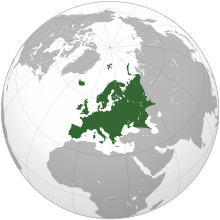
Europa ( pronunciación (axuda · info)) é unha das grandes penínsulas de Eurasia (segundo como se considere, a maior delas), á que de forma convencional e por motivos históricos considérase un continente propio, e pertence a súa a Eurafrasia. Europa esténdese pola metade oriental do Hemisferio Norte, dende o océano Glacial Ártico polo norte ata o mar Mediterráneo polo sur. Polo leste, chega ata o océano Atlántico, admitíndose que polo leste limita con Asia nos Montes Urais e o Cáucaso, compartindo entre ámbolos continentes o mar Caspio.
En Europa naceu a cultura occidental, os países europeos xogaron un papel predominante desde o século XVI, especialmente despois do comezo da colonización doutros continentes polos europeos. Entre os séculos XVII e XIX os europeos controlaban a maior parte de África, América, Oceanía e unha parte substancial de Asia. A Primeira Guerra Mundial e a Segunda Guerra Mundial levaron a un devalo do dominio europeo nos asuntos mundiais e os Estados Unidos e a Unión Soviética ocuparon esa preminencia. A Guerra Fría entre esas dúas superpotencias dividiu Europa ata o colapso da URSS.
Índice
1 Xeografía
1.1 Flora
2 Historia
3 Etnografía
4 Linguas
5 Relixión
6 Demografía
7 División política
8 Economía
9 Mapas
10 Notas
11 Véxase tamén
11.1 Outros artigos
Xeografía |
- Artigo principal: Xeografía de Europa.
Europa é o segundo continente máis pequeno da Terra tras Oceanía, ten unha extensión de 10 530 751 km², representando o 7 % das terras emerxidas. Pódese definir a Europa como unha macro unidade xeográfica, como pode ser América do Norte e América do Sur. De feito, tamén é definido coma un subcontinente da Eurasia.
Flora |
As zonas de vexetación de Europa espállanse polo continente (dun xeito aproximado), en faixas paralelas que van dende o océano Atlántico ata os Montes Urais. É un cinto de árbores de folla caduca e coníferas: carballos, pradairos, olmos mesturados con piñeiros e abetos.
- As rexións árticas da Europa setentrional e as vertentes superiores das súas montañas caracterízanse por unha vexetación de tundra, constituída a base de liques, arbustos e flores salvaxes.
- As temperaturas do interior desta parte de Europa, máis suaves pero aínda frías, crean un ambiente favorábel para o desenvolvemento de coníferas como o piñeiro, aínda que tamén hai abidueiras e chopos.
- No centro de Europa, a maior parte da gran terra chá europea está cuberta de prados. Ucraína caracterízase pola estepa, unha rexión chá e seca de herba curta.
- As zonas próximas ó mar Mediterráneo destacan polos froitos dalgunhas das súas árbores e arbustos, especialmente as olivas, os cítricos, os figos e a uva.
Historia |
- Artigo principal: Historia de Europa.

Europa en 1360, durante a Guerra dos Cen Anos.
A historia de Europa é o conxunto de sucesos relativos ás poboacións do continente europeo, desde que foi habitado polos primeiros seres humanos até a actualidade.
O Homo sapiens, segundo algunhas teorías, apareceu hai uns 130.000 anos en África.[1][2] Porén, tamén algúns destes humanos puideron chegar desde Asia e o Oriente Medio a Europa, onde se asentaron entre 40.000 e 25.000 a.C. (Paleolítico superior).[3]
A Antigüidade clásica estivo dominada polo influxo da civilización greco-latina sobre o resto de Europa. A fragmentación política de Europa e os sucesivos intentos forzados de unificación sumiron ao continente en numerosos conflitos e guerras durante a Idade Media, como a Guerra dos Cen Anos (que, pese ao nome, durou máis de un século).
A Idade Moderna marca para Europa o inicio de procesos que moito despois darían lugar á globalización, e foi o tempo no que os conflitos bélicos se fixeron cada vez máis desastrosos, como na chamada Guerra dos Trinta Anos. Os progresos económicos e o desenvolvemento científico-tecnolóxico aceleráronse en desmedro dos doutros continentes e, de maneira moito máis notoria, durante a Idade Contemporánea, producindo tensións por competencias que desencadearon máis guerras (como as guerras napoleónicas e as guerras mundiais).
Hoxe en día os procesos tendentes á unificación procúranse pacificamente, como no caso da formación da Unión Europea, aínda que non exenta de avances e retrocesos.
|
|
|
|
Etnografía |
A poboación europea é maioritariamente de tipoloxía racial branca ou caucásica, dividida en dous grandes grupos subétnicos: os nórdicos, que acostuman ter unha pigmentación de pel branca clara e rosada, cabelo loiro, ollos entre azuis, verdes e castaños claros, e os mediterráneos que poden ter a pel branca clara ata a pel morena escura, a maioría con cabelo castaño escuro ou negro, cos ollos que varían moito pero na maior parte son de cor castaña escura ou pardenta. Ámbolos dous grupos posúen individuos de cabelo ondulado.
Linguas |

Distribución aproximada das linguas actualmente faladas en Europa.
Existen moitas linguas no continente europeo como consecuencia da diversificación das súas raíces ancestrais en diferentes dialectos. Así,
- do latín proceden as linguas romances (castelán, francés, occitano, sardo, italiano, romanés, portugués, galego, catalán, romanche, francoprovenzal etc.);
- do xermano (inglés, holandés, alemán, frisón, sueco, dinamarqués, noruegués, islandés, feroés;
- do eslavo (ruso, polaco, checo, búlgaro, belaruso, ucraíno, sorabo, serbio-croata, esloveno, eslovaco) e de raíces eslavo macedónicas,
- do grupo ugro-finés (finés, estoniano, húngaro etc.),
- do céltico (irlandés, gaélico, bretón , manx ,escocés),
- do helénico (grego).
- grupo báltico (letón, lituano),
- o albanés etc.
- o éuscaro ou vasco ten unha orixe aínda non determinada con seguridade.
Outras:
Linguas saamis, Turco
Relixión |
As relixións maioritarias de Europa son as cristiás. Nos países mediterráneos profésase a relixión católica, que tamén é practicada nalgúns países do norte e balcánicos, o protestantismo no norte e centro de Europa, e ortodoxa, comandada polas diversas igrexas gregas ou ortodoxas nos Balcáns e Rusia.
Existe tamén unha minoría de persoas que profesan o xudaísmo e o islamismo (con forte crecemento debido á inmigración), e outras relixións minoritarias. Unha boa parte recoñece non profesar ningunha ou non practicar.
Demografía |
- Artigo principal: Demografía de Europa.
- Véxase tamén: Migración en Europa e Cultura europea.
En 2005 estimábase a poboación de Europa en 728 millóns de persoas segundo a ONU, o que representa a novena parte da poboación mundial. Hai un século Europa contaba co 25 % da poboación mundial. Despois dunha fase de medre cero, desde o 2000 a poboación europea comezou un novo declino demográfico a causa da diminución da natalidade, só en parte compensado pola inmigración. E segundo as estimacións da ONU para o ano 2050 en Europa vivirá o 7% da poboación mundial, uns 653 millóns de persoas.
División política |
- Véxase tamén: Entorno natural da Unión Europea.
Dende comezos da década de 1990, Europa viu cambiar a súa división política de xeito considerable coma consecuencia da caída da URSS e o desmembramento de Iugoslavia e Checoslovaquia (Revolución de Veludo, 1993).
Países que constitúen Europa na actualidade:
|
|
|
|
|
Países con parte do seu territorio en Europa:
- Rusia
- Turquía
Por outra banda, a liña divisoria entre Europa e Asia é obxecto de discusión e, por convención, establécese nos Montes Urais e mailo río Ural, así como tamén o Cáucaso. Hai quen considera, polo tanto, que Casaquistán -no límite dos Montes Urais- e Xeorxia, Armenia e Acerbaixán -no límite do Cáucaso- forman parte de Europa (mesmo nas distintas wikipedias non hai acordo sobre a lista de países que forman parte de Europa).
Algúns datos para aclarar esta afirmación:
- No caso de Casaquistán a UNESCO clasifícao tanto en Europa como en Asia[5].
- En canto a Xeorxia, forma parte do Consello de Europa o mesmo que Armenia e Acerbaixán -aínda que estean ao sur do Caúcaso e polo tanto xeograficamente fóra de Europa-[6].
Economía |
- Artigo principal: Economía da Unión Europea.
Mapas |

As relixións en Europa

As linguas de Europa

Problemas ambientais en Europa

Zonas horarias en Europa.

Fusos horarios de Europa

Europa lingüística

Cultura rexional de Europa

Europa no ano 1000.


Notas |
↑ Goodman, M., Tagle, D., Fitch, D., Bailey, W., Czelusniak, J., Koop, B., Benson, P., Slightom, J. (1990). "Primate evolution at the DNA level and a classification of hominoids". J Mol Evol 30 (3): 260–6. PMID 2109087. doi:10.1007/BF02099995.
↑ "Hominidae Classification". Animal Diversity Web @ UMich. Consultado o 312012.
↑ "Homo Sapiens: más influencia de Asia que de África". Deutsche Welle 14.08.2007 (en español). 2007. Arquivado dende o orixinal o 21/03/2008. Consultado o 3/1/2012..
↑ en conflito actualmente polo non recoñecemento do nome de 'República de Macedonia' ó ter Grecia unha rexión co nome de 'Macedonia'
↑ Europe[Ligazón morta] e Asia and the Pacific[Ligazón morta]
↑ "Estado membros do Consello de Europa". Arquivado dende o orixinal o 24 de agosto de 2004. Consultado o 24 de agosto de 2004.
Véxase tamén |
 | Commons ten máis contidos multimedia sobre: Europa |
Outros artigos |
- Eurozona
- Consello de Europa
- Capitais de Europa
- Historia da Unión Europea
- Unión Europea
- Clima de Europa
- Literatura europea
Wikimedia Atlas de Europa.
| ||||||
 Andorra •
 Bélxica •
 Chequia •
 Cidade do Vaticano •
 Dinamarca •
 Francia •
 Kosovo •
 Macedonia do Norte •
 Mónaco •
 Montenegro •
 Suíza •
| |||||||||||||||||||||||||||||||||||||||||||||||||||
|
 :
|
Categoría:
- Europa


(window.RLQ=window.RLQ||[]).push(function()mw.config.set("wgPageParseReport":"limitreport":"cputime":"0.864","walltime":"1.238","ppvisitednodes":"value":3219,"limit":1000000,"ppgeneratednodes":"value":0,"limit":1500000,"postexpandincludesize":"value":131610,"limit":2097152,"templateargumentsize":"value":15538,"limit":2097152,"expansiondepth":"value":10,"limit":40,"expensivefunctioncount":"value":16,"limit":500,"unstrip-depth":"value":0,"limit":20,"unstrip-size":"value":12318,"limit":5000000,"entityaccesscount":"value":17,"limit":400,"timingprofile":["100.00% 866.675 1 -total"," 33.95% 294.271 1 Modelo:Control_de_autoridades"," 27.53% 238.603 1 Modelo:Continente"," 27.24% 236.069 1 Modelo:Infobox"," 24.86% 215.433 3 Modelo:Lista_despregable"," 10.52% 91.183 1 Modelo:Listaref"," 6.87% 59.500 6 Modelo:Navbox"," 5.78% 50.065 1 Modelo:Cita_publicación_periódica"," 4.89% 42.362 1 Modelo:Sen_referencias"," 4.41% 38.213 3 Modelo:Ifsubst"],"scribunto":"limitreport-timeusage":"value":"0.338","limit":"10.000","limitreport-memusage":"value":7118659,"limit":52428800,"cachereport":"origin":"mw1322","timestamp":"20190323193136","ttl":2592000,"transientcontent":false);mw.config.set("wgBackendResponseTime":146,"wgHostname":"mw1251"););


